
Leading the Way: An Interview with Haley Oyler
We can't make all these challenges disappear, but we can give families better information and tools to advocate for their kids. I think that's one of the most important things we've learned: even when we can't change every barrier a family faces, we can work together to make it a little easier for the next family.
Haley Oyler, SETBP1 Society PresidentIn our Leading the Way series, we celebrate patient advocacy group (PAG) leaders helping move rare disease research and support forward. In this spotlight, meet Haley Oyler, President of SETBP1 Society. Haley reflects on his path into rare disease advocacy, lessons in leadership, and the incredible progress of the SETBP1 community.
1. Can you tell us a little about yourself, your family, and your journey into the world of patient advocacy?
Happy to, and thank you for the opportunity to share our story.
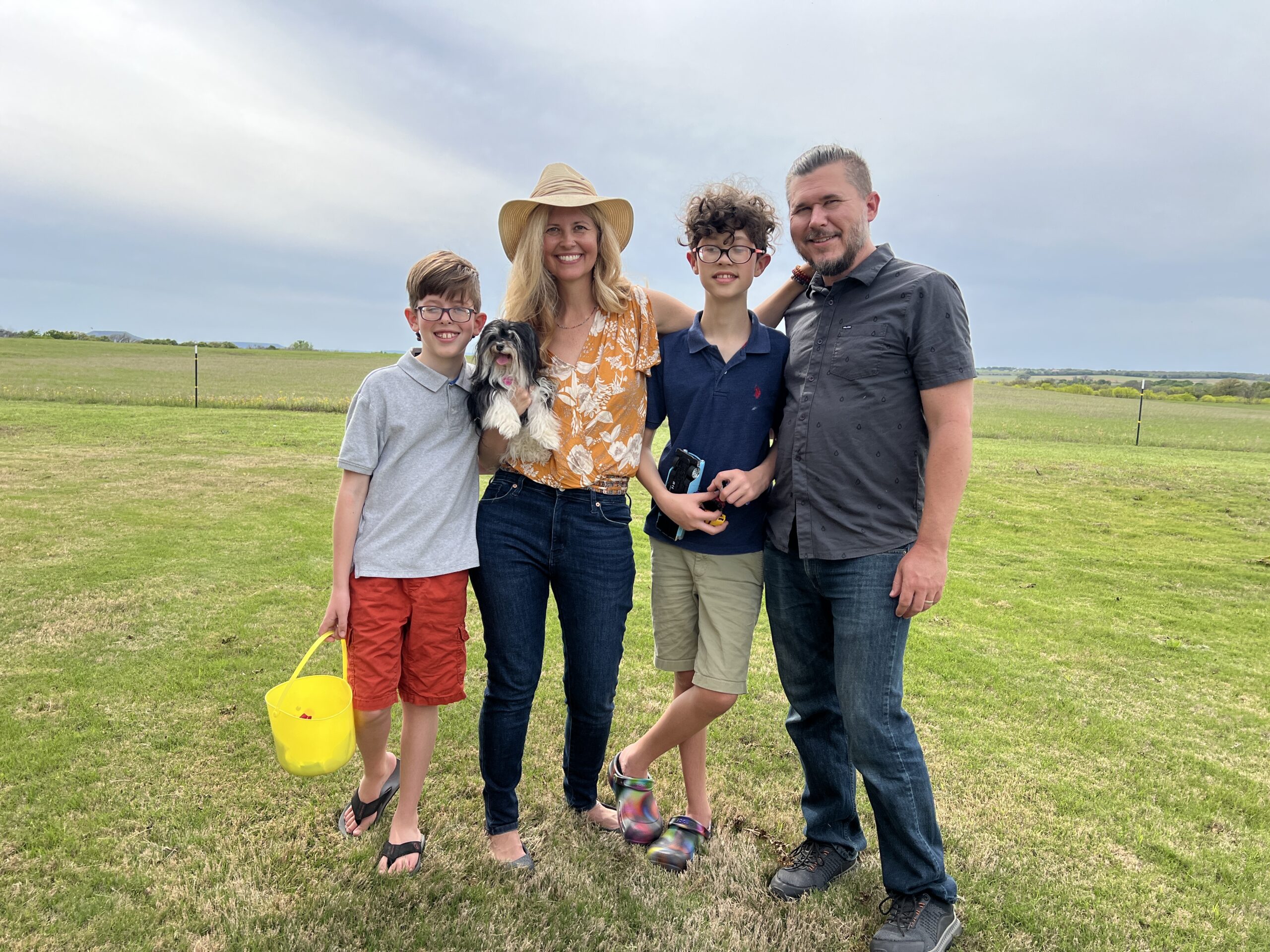
I’m a mom to two teenage boys and am married to my husband, Eric. Eric and I met at the end of my senior year at the University of Texas at Austin in a Real Analysis math class. He was a computer science major, and I was a math major. Ten years later, we conceived our first son, Cole, while we were on a nine-month sabbatical in Guatemala.
I loved being pregnant, and I can’t adequately describe the joy I felt when I first saw our perfect little boy. He needed a tongue-tie release at six days old to help him nurse properly, but otherwise, Cole was a happy, quiet baby. He was born with low muscle tone, but honestly, we didn’t really understand what that meant at the time and didn’t think much of it.
Cole reached his motor milestones toward the later end of the typical range, sometimes a little beyond it. He didn’t babble much as a baby, and that continued into his toddler years. He was very social, though, and he worked hard to communicate with us. He would grab our hands, use a little sign language, or gesture with his body to help us understand what he wanted.
By about 15 months, Cole’s world, and ours, began to include a lot of therapists. He needed help learning to walk, talk, and coordinate his movements, so we started speech, occupational, and physical therapy. He also began Early Childhood Intervention at 18 months and eventually attended our public school district’s preschool program for children with disabilities.
By the time Cole was two, we suspected there might be an underlying reason for his developmental challenges, so we began pursuing genetic testing with support from Cole’s pediatrician. For the next several years, therapy was a huge part of our lives. Between private and school-based services, Cole received speech therapy five times a week from about ages three to five, along with occupational and physical therapy at different points along the way.
 Our first round of genetic testing came back negative. At the time, our geneticist didn’t recommend moving on to whole exome sequencing (WES), which was the next step available to us. She explained that they generally weren’t finding answers through WES for children like Cole and that the test was expensive. And just like that, we were sent home without an answer.
When Cole was four, we attended an Apraxia Kids conference. I remember hearing several parents talk about how whole exome sequencing had finally provided answers for their children. It made me wonder whether we were giving up too soon. I went home, started researching genes that might explain Cole’s challenges, and sent a list to his geneticist. We had already met our out-of-pocket maximum for the year because of all Cole’s therapy appointments, so the testing would not cost us anything additional.
A few days before Cole turned five, I met with the geneticist alone as my husband was traveling. None of the genes on my list turned out to be the answer, but that testing did lead us to one. The geneticist said she was surprised they had found something. The answer was hiding in a tiny spot within a gene we had never heard of, called SETBP1
2. Could you share your family’s experience with your child’s SETBP1 haploinsufficiency disorder and how you navigated those early days?
Finding the answer was a huge moment for us, but it wasn’t quite the relief you might imagine. It gave us a reason for some of the challenges Cole had been facing, but it also opened up a whole new set of questions. What did this mean for him? What could we expect as he grew up? And where could we turn to learn more?
At the time, there was very little information available about SETBP1. The information we were given focused primarily on Schinzel-Giedion syndrome, a serious progressive condition associated with certain changes in SETBP1. Our geneticist thought it was unlikely to explain Cole’s presentation, although it hadn’t been ruled out. She also told me about a handful of cases involving children and adults with intellectual disability, speech difficulties, attention and behavioral challenges that were associated with having lower levels of SETBP1. That information was buried in a research paper covering several different neurodevelopmental disorders, and she thought this was more likely to explain Cole’s challenges.
I remember thinking, how can we have a genetic diagnosis but still know so little about what it means for our child?
I would spend my days taking care of our two young boys and then stay up for hours after they went to bed, searching the internet for anyone studying SETBP1 and for other families whose children might have the same condition.
We had an answer, but only part of one. There was no established name for the disorder. There was no dedicated organization focused on it, no parent support group, and no established research community with years of SETBP1 research to draw on.
It was a difficult and lonely time. We were trying to understand what this diagnosis might mean for Cole and our family, but there was so little information to guide us. We wanted answers, and we wanted hope, but neither was easy to find.
Within the year, we had connected with three families who lived abroad. We even flew across the country to participate in a three-day research study focused on autism, called the TIGER study, because we hoped it would help us connect with another family in the United States whose child had participated in the same study. Thirteen months after Cole’s diagnosis, we finally connected by email with another family whose child also had a SETBP1 variant that resulted in insufficient levels of the protein for typical function.
That connection meant so much to me. For the first time, we were able to connect with another family here in the United States who was navigating something similar. Her son was older than Cole and hearing her story brought me so much comfort and hope. It was a lifeline. We were still learning, and there were still so many unanswered questions, but for the first time, I had another parent here in the United States who understood some of what we were going through. We were no longer quite so alone.
Looking back, those early days were defined by how much we didn’t know and how hard we had to work to find even the smallest pieces of information. We wanted other families to have a different experience, one where they could find other parents who understood, access reliable information, and have a community to turn to as they navigated their own journey.
3. Your leadership with the SETBP1 Society has made and continues to make a significant impact. What inspired you to step into that role?
Honestly, I think it was the families who came before us. Other parents had faced the same struggles of not finding answers for their children, feeling lost and alone, and wishing things could be different. Instead of accepting that this was just how things were, they did something about it. They paved the way for families like ours.
When Eric and I were talking with the researchers about the findings from Cole’s testing through the TIGER study, which suggested he was in the borderline range for autism, we asked what other families did in situations like ours where there was so little known about their child’s disorder. They said that other families had formed nonprofits to bring families together, promote research and build a community.
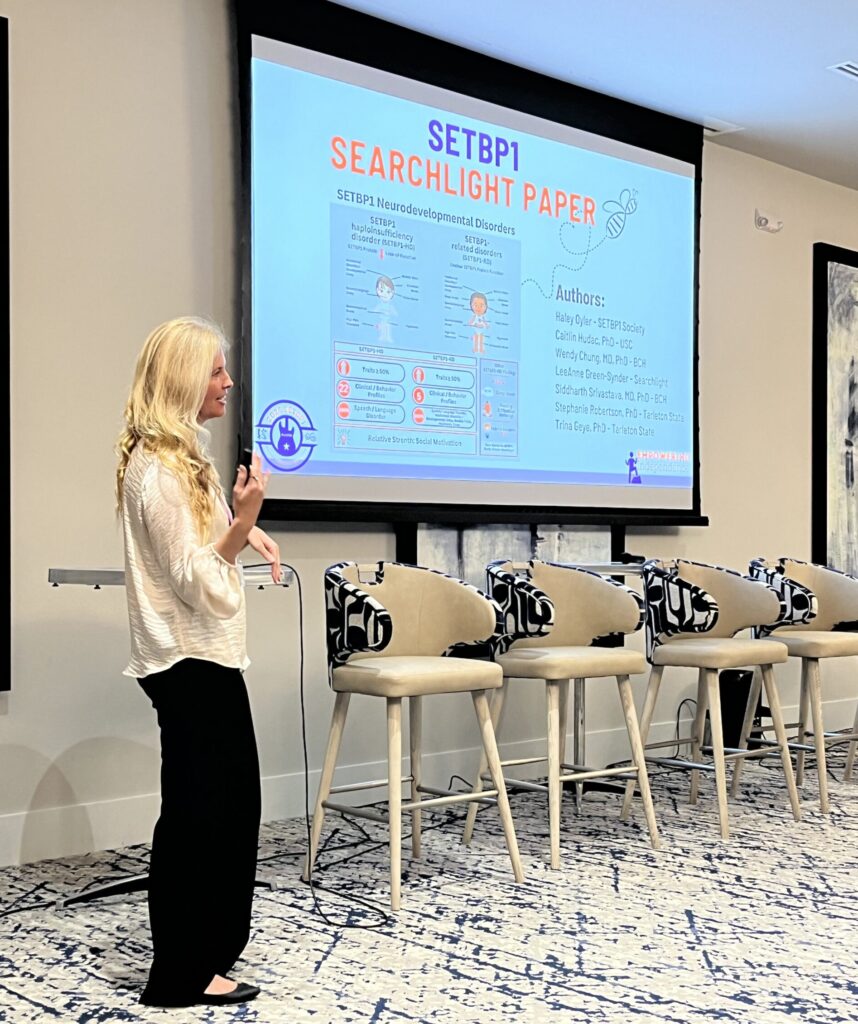
We took that advice to heart. Within a couple of months, I had enrolled in an Austin Community College class about creating non-profits in Texas. My background was in math, project and product management in tech, and web development, so starting a nonprofit wasn’t something I had been trained to do. In 2017, we founded the SETBP1 Society, a nonprofit dedicated to supporting families affected by SETBP1 haploinsufficiency disorder and related disorders, providing education, and promoting and funding research.
I also connected with Simons Searchlight to ask them to add SETBP1 to their list of supported genes, and I connected with other rare disease leaders who had already built their own organizations. A few amazing leaders who helped guide me through those early days were Leah Schust with SCN2A Families and Liz Marfa-Ash with GRIN2B Foundation.
Their willingness to share what they had learned made a difference for me.
4. Is there a moment or achievement from your time with the SETBP1 Society that stands out as especially meaningful? What makes it significant?
Oh, there are so many. Two that stand out are very different but both get to the heart of why this work matters to me.
One was when I spoke to a SETBP1 parent whose child’s neurologist told them that their child had Schinzel-Giedion syndrome. I was able to consult with Wendy Chung, who serves on our Medical and Scientific Advisory Board and a principal investigator for Simons Searchlight, and quickly share with the parent the information they needed to understand that their child’s diagnosis was actually SETBP1 haploinsufficiency disorder (SETBP1-HD), not Schinzel-Giedion syndrome.
Having a rare diagnosis is burdensome enough without having to navigate a misdiagnosis on top of it. That experience reinforced why we work so hard to provide accurate, accessible educational materials. Families deserve to understand their child’s diagnosis and have information that helps them get the right care and support.
Another moment that stands out is simply seeing our SETBP1 Bees, as we affectionately call our kids, all together. They are all their own unique selves, but when you see them together, you start to notice familiar ways of interacting and engaging with the world. They really are bees from the same swarm. There is nothing like seeing your child connect and play with other kids who seem to understand him instinctively. And as parents, we get to experience that same feeling of being understood, of being around people who just get it, too.
At our last conference, one parent shared that she usually couldn’t just let her child run around and play without feeling anxious. This also impacted how often they got out of the house together. She was always worried about having to explain why her child was behaving a certain way. At the conference, she felt relaxed because the other children were engaging in many of the same ways, and no explanation was needed.
That has stayed with me. We can talk about research, education, and resources, and all of those things are incredibly important. But creating a place where our kids can simply be themselves, and where parents can exhale because they feel understood, is just as meaningful to me.
5. From planning patient advocacy and research conferences, what key lessons or best practices would you share with others?
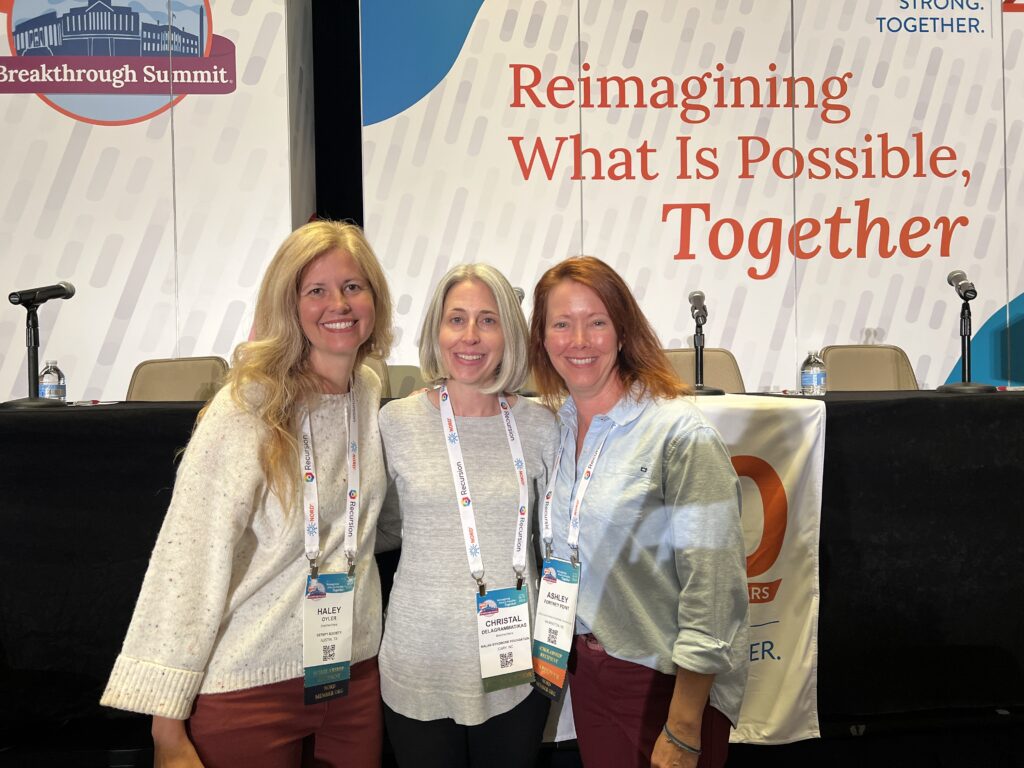
You are not alone and you do not need to do this alone. There are so many amazing and open rare disease leaders out there that have taken steps before you. Reach out to the other rare disease leaders, ask them questions, and learn from their experiences. You don’t have to reinvent the wheel.
We were fortunate that Simons Searchlight hosted our first research and patient conference alongside three other rare disorder groups. They asked the leaders of our four organizations for input but they did most of the heavy lifting. That conference is the model I have used for our subsequent conferences, including the one we are preparing for now.
One of the biggest things I’ve learned is that it’s not enough to bring researchers together or to bring families together separately. We need to bring them together. Some of the researchers attending our conferences have never met an individual affected by SETBP1-HD or SETBP1-related disorders (SETBP1-RD) in person. Seeing the individuals and families behind the research can make the work feel much more personal. It helps connect what they’re doing in the lab to the real people who may one day benefit from it.
The same is true for medical professionals. Seeing individuals in a clinic is different from seeing them interact with their peers and families in a more relaxed setting. A conference can give clinicians a broader picture of who these individuals are and how they engage with the world outside a medical appointment.
And finally, don’t pack every minute with presentations and scheduled activities. Parents need time to relax, get to know one another, and share their stories. Build in a couple of parent breakout sessions and leave unstructured time for people to connect naturally. Some of the most meaningful moments happen when people have the space to simply be together.
 6. Could you provide insights into the challenges you’ve encountered while advocating for individuals with SETBP1 haploinsufficiency disorder? How have you managed to overcome these challenges, and what lessons have you learned along the way?
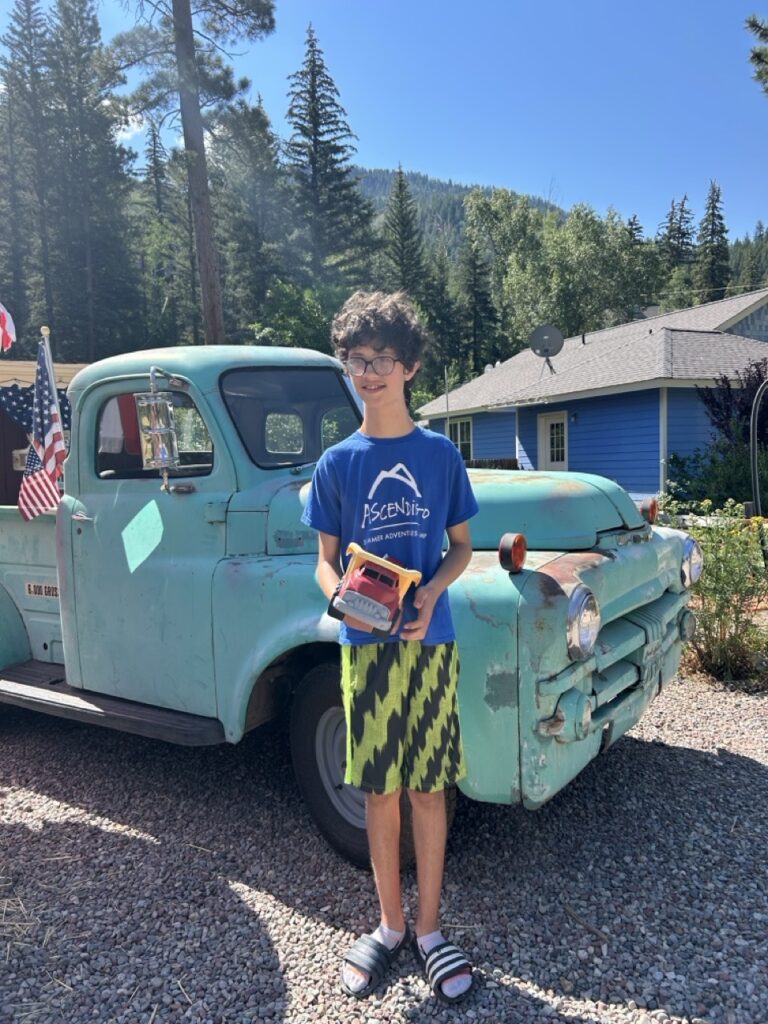
I think one of the challenges is that our SETBP1 Bees often don’t look noticeably different from other kids. Some have subtle facial differences, but if you saw one of our kids at school or out in the community, you probably wouldn’t know they had a genetic disorder. And that can be hard. When a child communicates or behaves in a way that others don’t understand, people may not realize there’s an underlying reason. It can also mean that the disorder goes unrecognized for a long time because, ultimately, you need genetic testing, such as whole exome or whole genome sequencing, to get a diagnosis.
Communication is a big part of this. Research has found that motor speech disorders are very common in individuals with SETBP1-HD and SETBP1-RD. Many of our Bees have childhood apraxia of speech, which makes learning to speak incredibly difficult. You might have a four-year-old who can only say a few words or short phrases, even though there’s so much more they want to say. As a parent, it’s hard to think about how much a child may want to communicate and how difficult it can be for them to get those words out.
And then there’s the challenge of getting the therapy they need. Many of our SETBP1 parents have shared that their insurance only covers 20–40 speech therapy sessions a year. Apraxia Kids recommends speech therapy three to five times a week for children with childhood apraxia of speech. Those numbers just don’t seem to line up. How is a family supposed to get their child the amount of therapy they need when insurance puts such strict limits on it? It’s frustrating to know that a child needs support and then have to fight to get that support covered.
One way we’re working to address this is through consensus-based clinical care guidelines for SETBP1-HD that are currently being developed. We’re working to include specific language that parents can use when advocating for additional speech therapy and explaining their child’s needs to insurance providers. I want parents to have something concrete they can point to, rather than feeling like they have to make the case on their own.
We can’t make all these challenges disappear, but we can give families better information and tools to advocate for their kids. I think that’s one of the most important things we’ve learned: even when we can’t change every barrier a family faces, we can work together to make it a little easier for the next family.
7. Which resources, networks, or tools have been most helpful to you as a parent, advocate, and/or researcher? What would you recommend to others starting out?
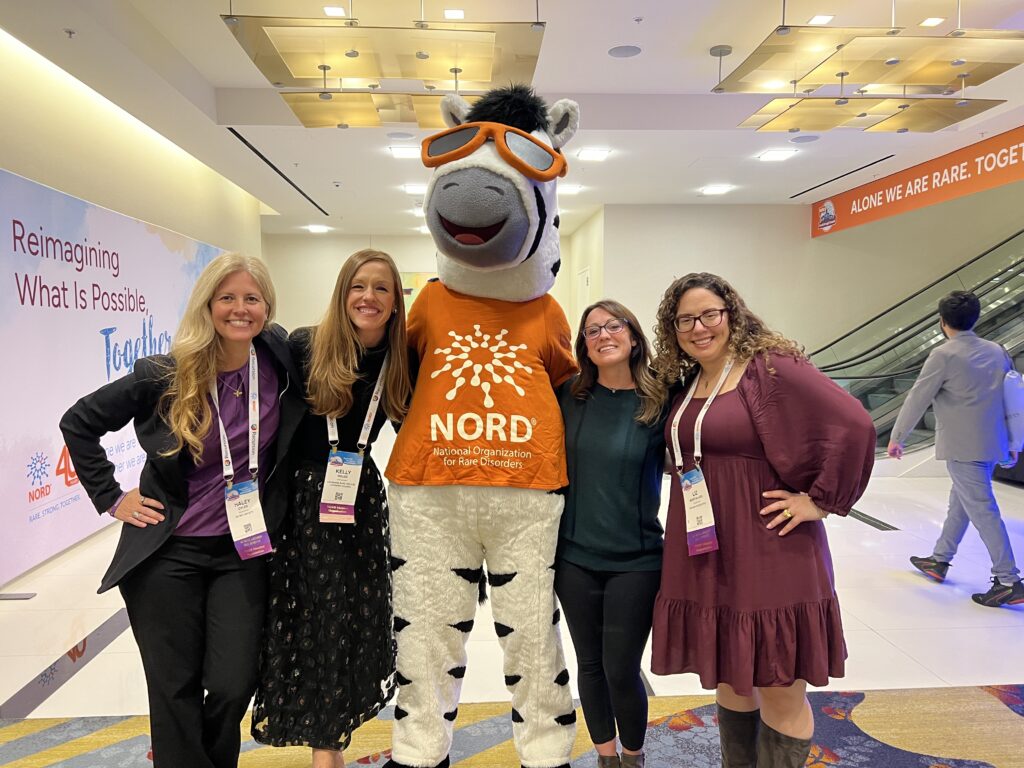
Connect with other parents, and don’t isolate yourself. Online communities, like Facebook groups for your child’s specific diagnosis or for special-needs parents in your area, are a good starting point. If you can, connect in person too. This journey is not a walk in the park, and hearing from other parents makes it feel less lonely. Share your own story as well. It’s important to feel heard and seen.
Learn from parents who have been down this road. Books like Rare Mamas by Nikki McIntosh and The Essential Guide for Families with Down Syndrome were written by parents willing to put their lessons on paper for the next family. Effie Parks’ Once Upon a Gene podcast features interviews with parents of children with special needs and with rare disease leaders.
Learn how to advocate at school. Wrightslaw: From Emotions to Advocacy: The Special Education Survival Guide helped me understand IEPs and education review meetings. When Cole was three, I also took a free “IEP 101” class through a local organization, which I’d recommend if one is available near you.
You know your child better than anyone else, and advocating for them is one of the best gifts you can give.
8. How has Simons Searchlight been a resource for you and your community?
Simons Searchlight has been a resource for our community from the beginning. They supported us through our virtual SETBP1 Family Conferences, helped us establish our SETBP1 Quarterly Collaboration Calls, where SETBP1 researchers and medical professionals come together to discuss updates, and hosted our first in-person conference.
They have also supported our subsequent conferences, developed iPSC lines that researchers and medical professionals have used to expand our understanding of SETBP1, provided access to a blood biobank, and serve as the home of our official SETBP1 registry and natural history study. They also supported our first major publication using data from the SETBP1 registry.
They have been with us through just about every step of the way, and we’re incredibly grateful for that partnership.
9. What is your mantra or source of motivation that keeps you going as both a parent and a patient advocacy leader?
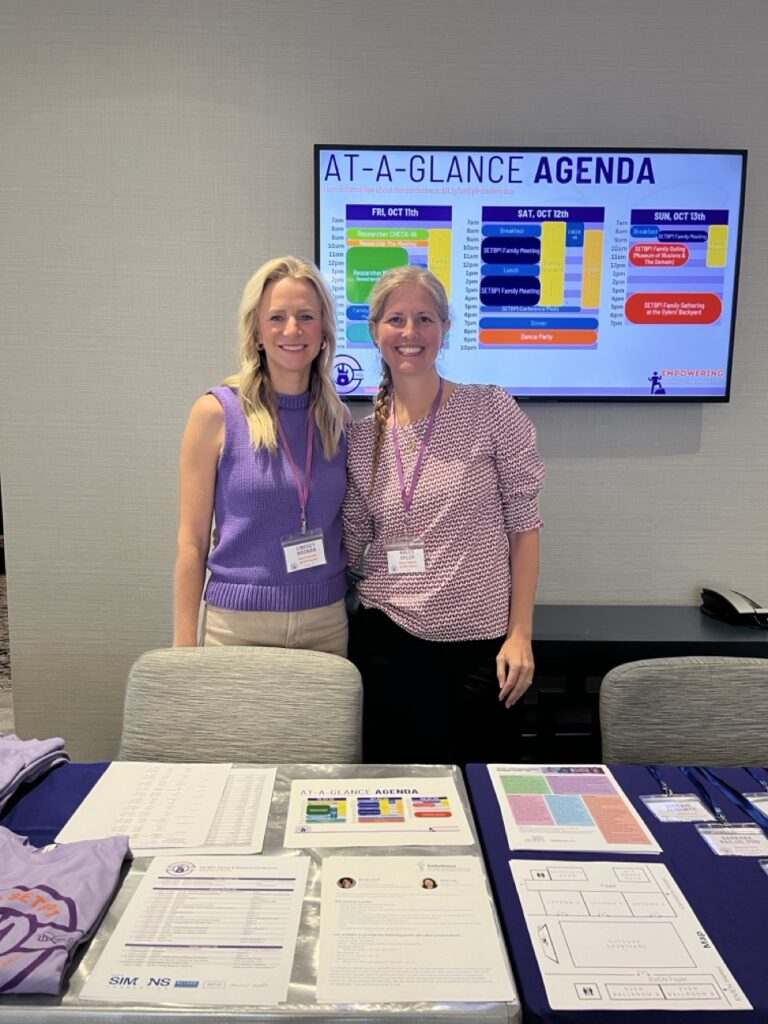
Haha, this is a good question. In all honesty, part of what keeps me going is the feeling that if I don’t do this, who will? I sometimes find myself thinking that other rare disease leaders have more experience, better access to funding, or a more eloquent way of speaking. Then I remind myself that SETBP1 Society needs someone willing to keep showing up and doing the work.
Most days, though, what keeps me going is hearing from SETBP1 parents who have joined our community and share how much they appreciate the materials on our website and the community we’ve created. It reminds me that we’re part of something bigger than ourselves and that the work we’re doing can make a real difference for families.
10. Is there anything else you’d like to share with the Simons Searchlight community or with families who may just be starting their own journey?
Don’t be afraid to ask for help, and don’t isolate yourself. Consider participating in research and sharing your child’s experiences to help others better understand the impact of their disorder. Maybe your child is the first person identified with that condition. Maybe they are the thousandth. Either way, sharing your family’s experience can help move the field forward and make the journey a little easier for the families who come next.
When Cole was diagnosed, there were fewer than 20 people known to us with SETBP1 haploinsufficiency disorder. Today, our community includes more than 350 individuals.
Learn more about the SETBP1 Society.
Stay connected with Simons Searchlight
Join our newsletter to receive updates