
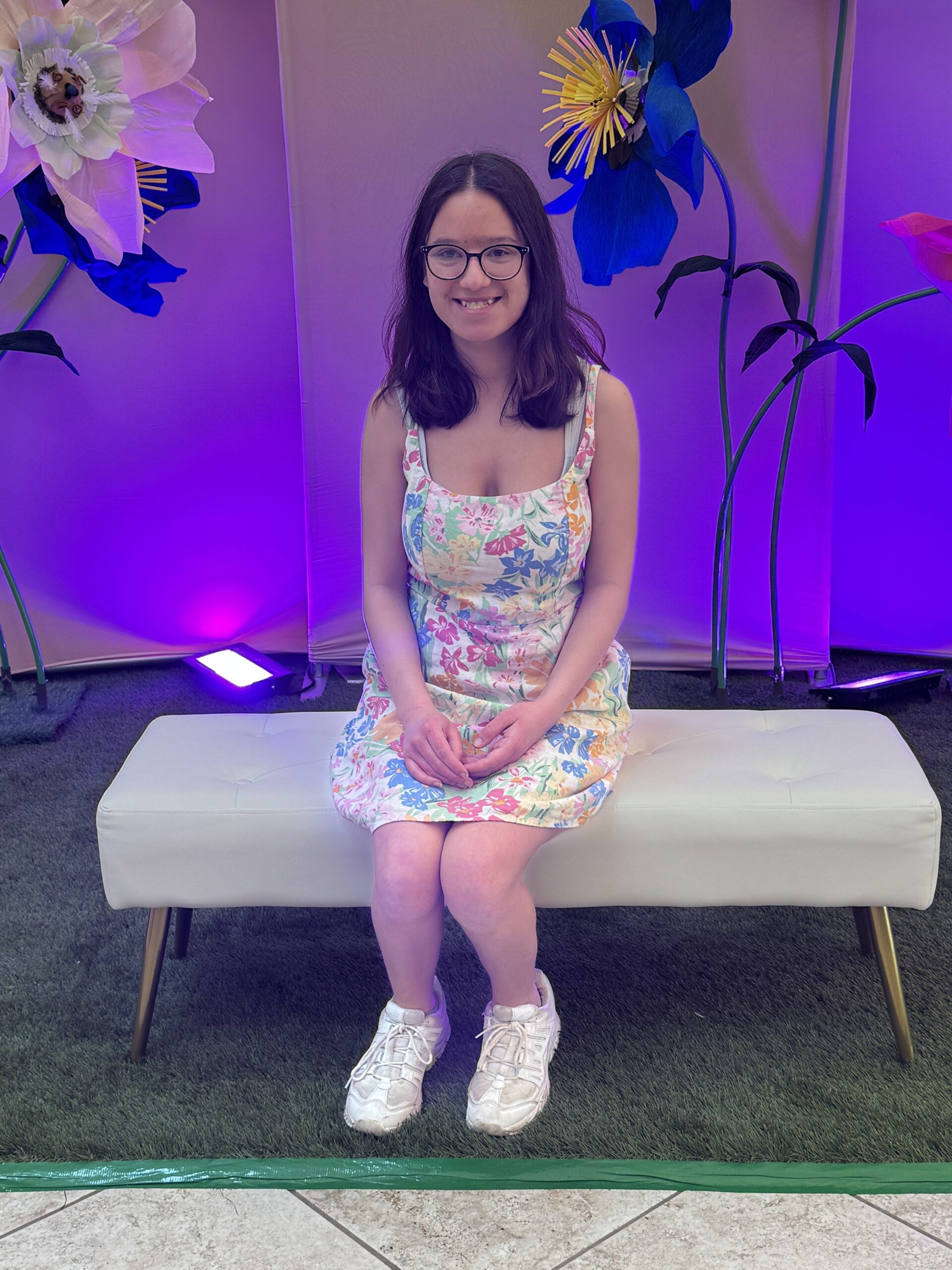
The Reynolds’ Journey with WDFY3-related syndrome and MBD5-related syndrome
There are so many unknowns with genetic changes. The more doctors can understand about gene mutations, the faster it can be recognized. Parents can get educated faster, kids can receive appropriate therapies, and educators can better understand how to support the child's learning.
Deanna Reynolds, mother to Grace, a 19-year-old living with WDF3Y-related syndrome and MBD5-related syndromeWhat is your family like?
Our family consists of dad (currently 54), mom (currently 50), and daughter (currently 19). Our daughter was adopted from Russia, so we don’t have a lot of birth information. She was diagnosed with ADHD, Sensory Processing Disorder, and Fetal Alcohol Syndrome. After genetic testing, she was also found to have WDFY3 and MBD5. An endocrinologist also found she has Hashimoto’s.
What do you do for fun?
We love to be outside. We love to attend church and watch TV together.
Tell us about the biggest hardship you face.
Right now our biggest hardship is her dad’s dementia. He’s in the late stage of it. He requires 24 hour supervision. It is very difficult for our daughter to understand the decline and know how to talk to him with patience and understanding.

What motivates you to participate in research? How has participating in research been helpful for you?
Participating in research helps to understand the unknown. It helps educate others and helps doctors learn more about the human body/brain.
How do you feel you are helping Simons Searchlight learn more about rare genetic changes?
There are so many unknowns with genetic changes. The more doctors can understand about gene mutations, the faster it can be recognized. Parents can get educated faster, kids can receive appropriate therapies, and educators can better understand how to support the child’s learning.
What is one question you wish researchers could answer about this genetic change?
It is so rare, and every family’s experience is so unique that I don’t have any questions.

What have you learned about your or your child’s genetic condition from other families?
We are very blessed that our daughter does not seem to share many of the speech problems that many kids experience. She has faced so many challenges, I’m very glad has come this far.
If you could give one piece of advice to someone recently diagnosed with this genetic change, what would it be?
Don’t be scared by the different challenges other families face. Just because other families struggle with a certain symptom does not mean your child will struggle. Take them as a challenge. If you know ahead of time your child MIGHT struggle with, say, fine motor skills, make sure you address the issue early and work with your child on those skills before preschool.
How has Simons Searchlight served as a resource for you and your family?
It’s interesting to read all the experiences the other families go through, and it will become a valuable resource for families to reach out for advice and support.
Stay connected with Simons Searchlight
Join our newsletter to receive updates