
Leading the Way: An Interview with Liz Spitzer
My greatest advice as a parent caregiver is to find your people. Find the people that understand this life and are walking on similar journeys. Find the ones you connect with and feel comfortable with. And then pour into those friendships.
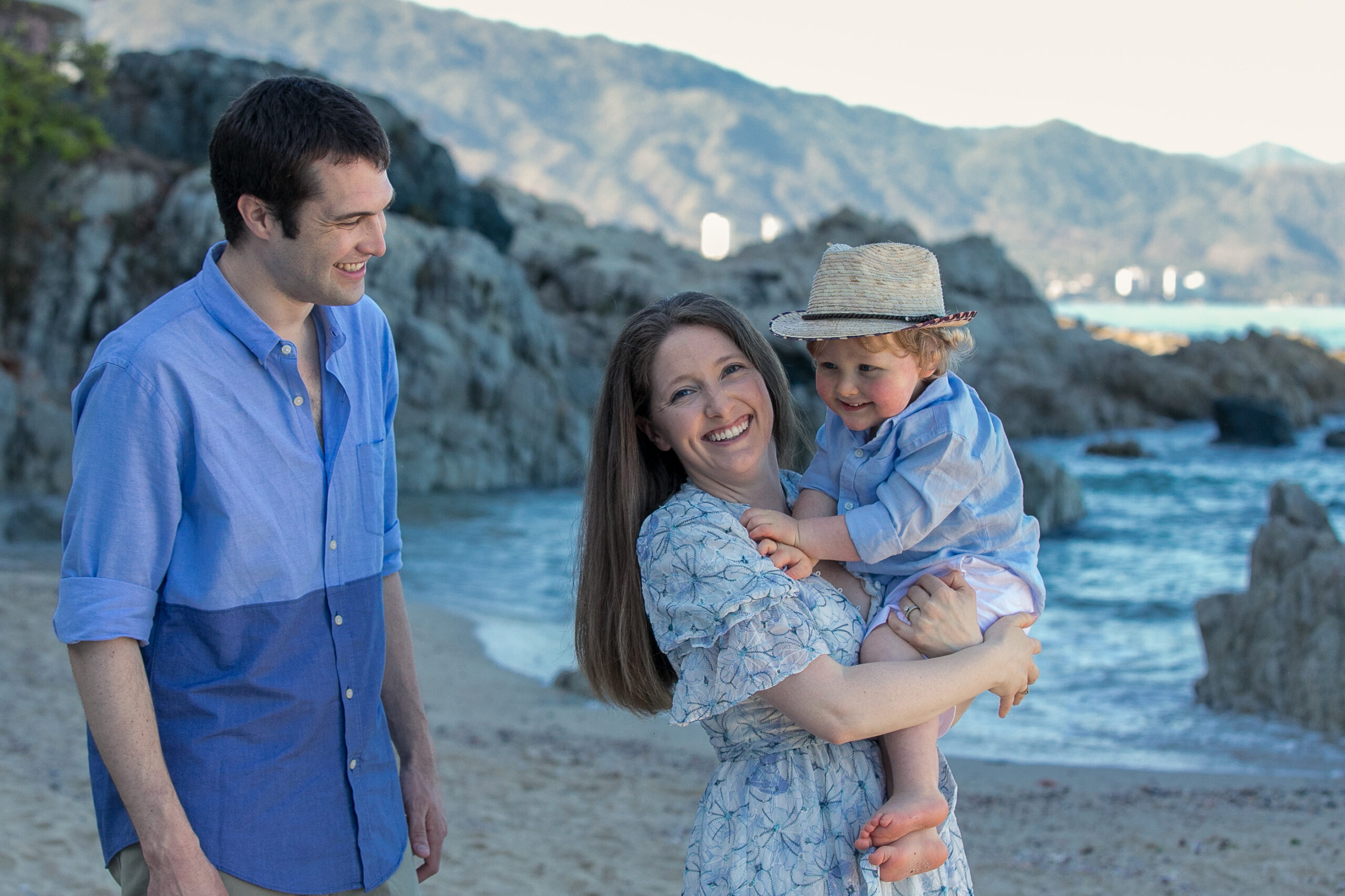
Liz Spitzer, COO and Co-Founder, DYNC1H1 AssociationIn our Leading the Way series, we celebrate patient advocacy group (PAG) leaders helping move rare disease research and support forward. In this spotlight, meet Liz Spitzer, PhD, Chief Operating Officer and Co-Founder of the DYNC1H1 Association. Liz reflects on her path into rare disease advocacy, lessons in leadership, and the incredible progress of the DYNC1H1 community.
1. Can you tell us a little about yourself, your family, and your journey into the world of patient advocacy?
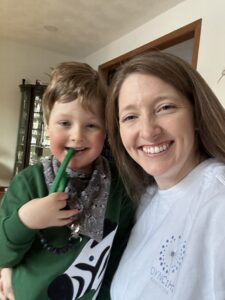
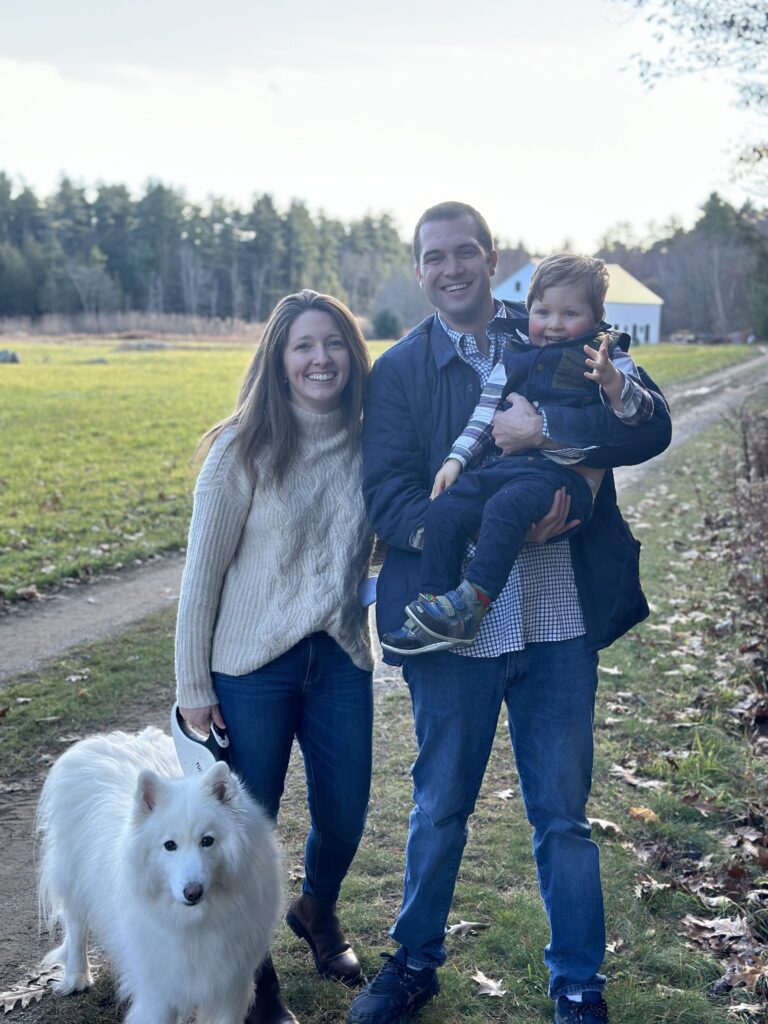
My name is Liz Spitzer. My husband and I are parents to a silly, wild 5-year-old boy with a DYNC1H1-related disorder, and a wonderful, adventurous 1.5-year-old girl. We currently live outside of Boston, where I work as a clinical psychologist with my own private practice.
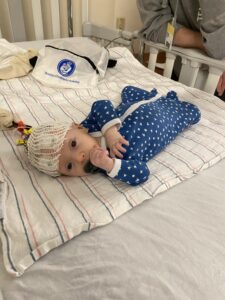
My husband and I welcomed our first child in early 2021, while I was a health services research postdoctoral fellow at the Veterans Affairs hospital in Boston. Soon after our son was born, he was admitted to the NICU for possible seizures. At 7 months old, he began having infantile spasms and was diagnosed with a likely pathogenic variant in the DYNC1H1 gene.
 At the time, there was no patient advocacy organization for DYNC1H1. During the first year after diagnosis, I met two other moms in a Facebook group who were talking about starting a patient advocacy group (PAG) but neither had any research experience, so I offered to help. Within a year, the three of us officially launched the DYNC1H1 Association!
2. Could you share your family’s experience with your child’s DYNC1H1 diagnosis and how you navigated those early days?
My son began having myoclonic episodes soon after birth and had four inpatient EEGs (electroencephalograms) in his first 6 months of life. During this time, the doctors noted his low tone and all of his many missed milestones. He was referred to early intervention, as well as different specialists who were trying to help understand the underlying cause of his delays.
When he was 7 months old, he began having infantile spasms. This new diagnosis qualified him for a research study at Boston Children’s/Harvard, which included whole genome sequencing. Within a few weeks, we received the DYNC1H1 diagnosis.
The genetic diagnosis felt like a partial answer – it gave us a range of what his future might look like, but it didn’t change his treatment. The diagnosis meant that the symptoms we had started piecing together were all part of a disorder, not just a simple blip that would soon resolve. We were again left with so much uncertainty and so many questions.
As a researcher, I was fortunate to have access to many libraries and journals, so I immediately went to PubMed and read as much as I could. I also joined a Facebook group of families with DYNC1H1-related disorder and read their stories. I joined Simons Searchlight and jumped at any research opportunity, in hopes that it would help propel research forward on DYNC1H1.
In the early days, I was also grasping to anything that gave hope or felt like it could give us some answers. We googled all the therapies and started doing intensive therapies at NAPA (Neurological and Physical Abilitation) Center. We also met other local families with rare genetic epilepsies, which became a lifeline for us.
3. Your leadership with the DYNC1H1 Association has made and continues to make a significant impact. What inspired you to step into that role?
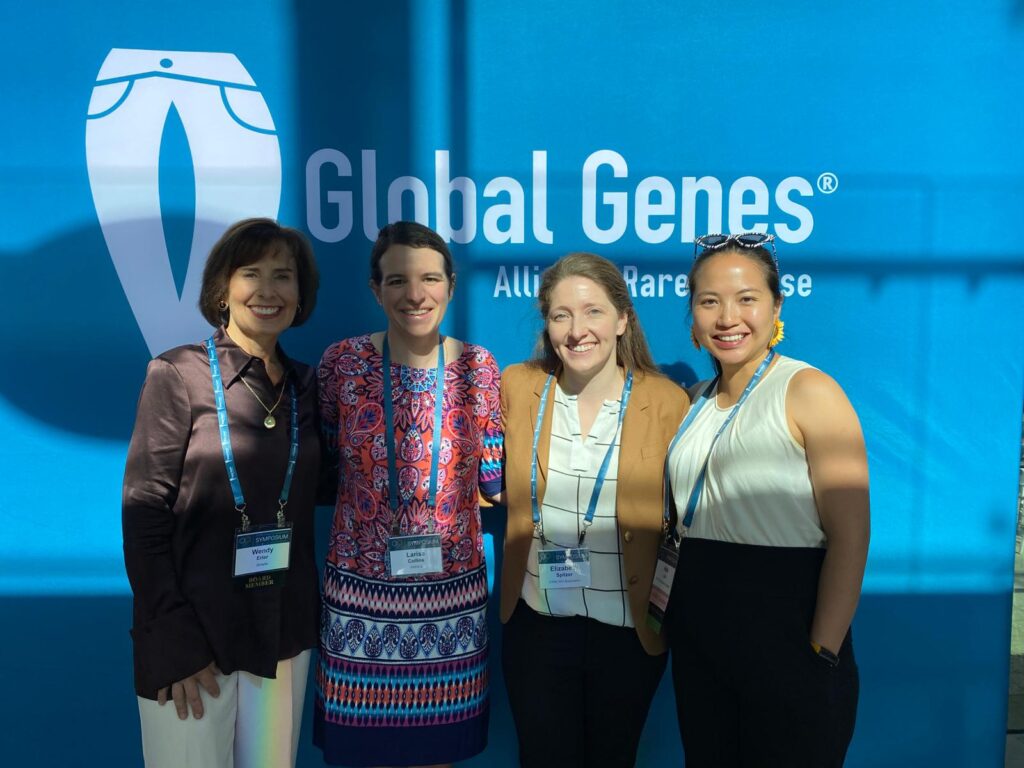
When I first offered to help create the foundation, I didn’t know what role I would play, nor did I fully understand how large of an undertaking it was. At the time, I was working full-time as a research psychologist in a dissemination and implementation research group within the VA. I knew that my understanding of healthcare systems, grant writing, and publications would be helpful. I also live in the Boston metro area, which gave me proximity to many opportunities to attend rare disease trainings, conferences, and events.
The biggest inspiration was obviously my son. It was also that feeling that if I didn’t do this, who would? It’s so hard in the early days to not have those thoughts of “why me?” “why our family?” and this felt like the flip of “why not me?”. This was something I could do to move the needle, to learn, to hopefully find better treatments for DYNC1H1-related disorder and give my son, and other people like him, the best chance at finding an effective treatment.
 4. Is there a moment or achievement from your time with the DYNC1H1 Association that stands out as especially meaningful? What makes it significant?
Creating our first induced pluripotent stem cell (iPSC) lines felt like a big achievement. From the first conversations we had with researchers and other PAG leaders, everyone emphasized the need for creating models. We knew this was a big priority and worked hard to fundraise to reach this goal. This allowed our researchers to begin to study the underlying mechanism of dysfunction for DYNC1H1-related disorder, which had yet to be understood.
We have our first models in labs right now and that feels like a huge step on the road to drug development. We’ve also been able to triple the number of people with DYNC1H1-related disorder who are registered with Simons Searchlight, which will help us better understand the course of disease and further our understanding of phenotype-genotype correlation.
5. From planning patient advocacy and research conferences, what key lessons or best practices would you share with others?
We are in the early stages of planning our first family conference in 2027, so we are looking to others for their best practices! We know how much planning, coordination, and funding go into family and research conferences and have been looking to others for their advice. We have hosted numerous virtual events with our community and cannot wait to be able to meet more families in person in the future.
6. Could you provide insights into the challenges you’ve encountered while advocating for individuals with DYNC1H1-related disorder? How have you managed to overcome these challenges, and what lessons have you learned along the way?
There have been a few challenges – first, our community is global. In our Patient Contact Registry, we have people from 44 countries. We have tried to make our website and information as accessible as possible, but language barriers are difficult. We have tried to use newer AI tools for translation and have also asked for volunteers to help translate important materials to other languages.
 In addition, like many other rare disease organizations, we do not currently have any paid staff. This means that we are all volunteering our time on top of our full-time jobs. Our small but mighty team has been incredible at dividing and conquering; however, we all wish we could give more. We are working on increasing the number of volunteers, including recruiting some student interns to help us. It’s been really great to see so many students excited to engage with our community!
7. Which resources, networks, or tools have been most helpful to you as a parent, advocate, and/or researcher? What would you recommend to others starting out?
We started reaching out to other PAGs in the rare disease community as soon as we started talking about creating our own PAG. The other PAG leaders have been an incredible wealth of knowledge and support for us. Listening to the Once Upon a Gene podcast was also really helpful, as there are many episodes with tips for starting out as a PAG. In addition to the concrete knowledge, advice, and tools other PAGs shared with us, it was also such a source of comradery and hope. It is incredible the progress that parents and caregivers have achieved for their loved ones.
I would definitely encourage PAG leaders to make connections with other rare disease groups and leaders, especially those that share symptoms or similar underlying mechanisms to their genetic condition.
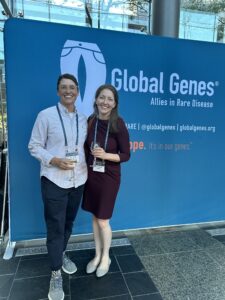
Attend conferences when you can and introduce yourself to people. It has been amazing to me how welcoming and helpful other PAG leaders have been. Everyone within the rare disease community genuinely roots for one another with the mentality that we are all stronger together and a breakthrough in one group will benefit all of us.
In terms of specific groups, we have found Simons Searchlight, COMBINEDBrain, Rare Epilepsy Network (REN), DEE-P Connections, Global Genes, and the Orphan Disease Center to be really great partners.
8. How has Simons Searchlight been a resource for you and your community?
 Simons Searchlight was our first natural history study of sorts and remains our largest collection of patient data. It will be critical for our understanding of phenotypes and for advancing research on DYNC1H1-related disorder. It is an especially helpful resource because it is free for researchers to access, collects data annually to allow for research on these disorders over time, and provides compensation for participants.
It is also a rigorously designed system, which allows our community to trust in the privacy and protection of their data. We would not be able to fund and build this sort of infrastructure on our own, so we are incredibly grateful to Simons Searchlight.
In addition, the team members at Simons Searchlight have been so wonderful to work with and are always so responsive and kind.
9. What is your mantra or source of motivation that keeps you going as both a parent and a patient advocacy leader?
My greatest drive is trying to give my son the best life possible. Within that is hoping that we can find a treatment to reduce symptoms, improve quality of life, and help him gain more independence. And as a parent, that comes in all forms of advocacy and working to help him experience all that he can.
I am also driven by the desire to help others on the journey, especially those that come after us. I remember the uncertainty that came with his diagnosis, and I hope that we can help families that are just receiving a diagnosis feel a sense of community and have more resources about DYNC1H1 available to them. I also hope that we will inspire and encourage other parents, researchers, and industry partners to join us in our quest to better understand and find effective treatments for DYNC1H1-related disorder.
10. Is there anything else you’d like to share with the Simons Searchlight community or with families who may just be starting their own journey?
My greatest advice as a parent caregiver is to find your people. Find the people that understand this life and are walking on similar journeys. Find the ones you connect with and feel comfortable with. And then pour into those friendships. Check in on them. Stay in touch. If they are local, meet up with and without your kids. The friendships I have developed with other medical or rare disease moms have been so life-changing for me on this journey.
Learn more about the DYNC1H1 Association.
Stay connected with Simons Searchlight
Join our newsletter to receive updates