
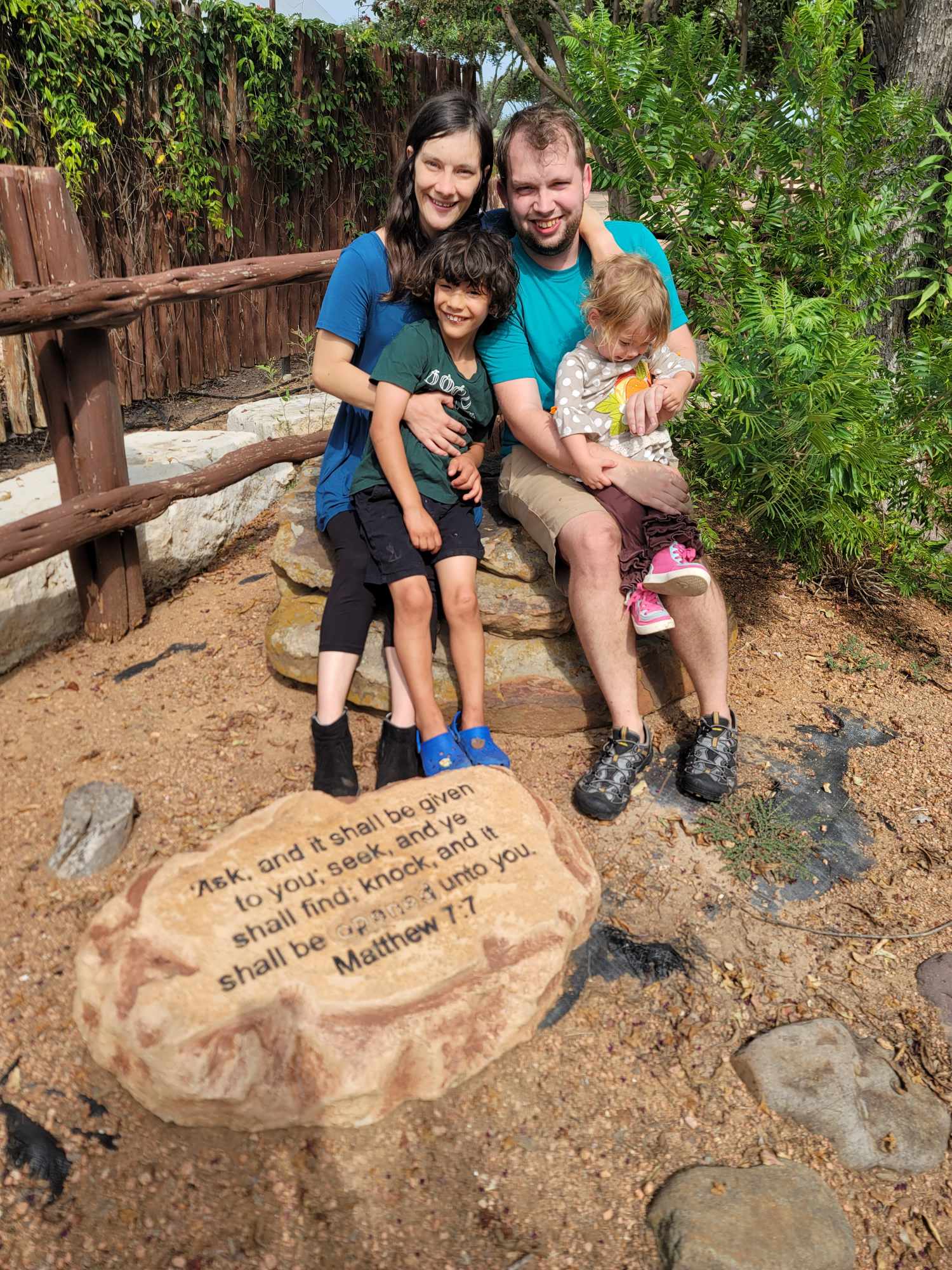
The Childers’ Journey with EBF3-related syndrome and AUTS2-related syndrome
Don't underestimate yourself or your child because great things come with knowledge and knowledge is power.
Hannah Childers, mother to Brayden, a 9-year-old living with EBF3-related syndrome and AUTS2-related syndromeWhat is your family like?
My fiance and I have two children, and my son and I both have HADDS Disorder as well as AUTS2 Syndrome, which are both rare developmental disorders that comes with a slew of medical conditions. Our daughter is 2 years old, and our son is 8 and they are both the light of our lives. My family is very outgoing, and very adventurous and we love exploring new places and having new experiences.
What do you do for fun?
We love to go hiking, and explore new places. We try to go to Disneyworld every year if we can because that is our happy place and our kiddos can be kids without judgement.
Tell us about the biggest hardship you face.
The biggest hardship our family faces is judgemental individuals because our life looks very different from other families. We have a lot of doctors appointments, therapy appointments, and we typically don’t have a lot of extra time that other families have. Another hardship we face is not enough medical professionals who know about either of our disorders, so we’ve had to advocate fiercely and educate doctors and related personnel.

What motivates you to participate in research? How has participating in research been helpful for you?
I am one of the few adults in the world who have AUTS2 as well as HADDS syndrome and I think it is so important to participate in research so more information about the disorders can be found so that better treatment options can become readily available and so that there can be more aware for both disorders. It’s been helpful because we now understand some things as we did not understand before.
How do you feel you are helping Simons Searchlight learn more about rare genetic changes?
I believe we are helping researchers find the causes for certain symptoms of the disorders and help them learn more about the brain changes and how it can influence each individual person so differently as well as how both syndromes are a range and not everyone will experience the same things and some have more challenges than others and it helps to research to find out the why behind why that occurs.
What is one question you wish researchers could answer about this genetic change?
I wish to know why in EBF3 is the cerebellum smaller than it should be, and what exactly should we expect with that finding. With AUTS2, I wish to bring more awareness to that disorder as well as why intellectual disability comes into play and what is causing that, if anything.

What have you learned about your or your child’s genetic condition from other families?
I’ve joined a wonderful facebook community for both of the disorders and in those communities i have found inclusive, acceptance, and a deeper level of understanding that I haven’t found anywhere else and we are connected to people who just get it, without having to explain every little thing and simplify things. I’ve learned that each of of us are so unique but we all share at least a few things in common with both disorders.
If you could give one piece of advice to someone recently diagnosed with this genetic change, what would it be?
My piece of advice would be don’t underestimate yourself or your child because great things come with knowledge and knowledge is power. I would also say that even though it looks bleak at times, it is anything but and to find your village and to lean on those people.
How has Simons Searchlight served as a resource for you and your family?
It’s been amazing as far as reading about different disorders and it’s certainly bringing more awareness to both of our disorders which I absolutely love to see.
Stay connected with Simons Searchlight
Join our newsletter to receive updates