
Leading the Way: An Interview with Jordana Koch
Don’t lose hope – quality of life is absolutely possible to achieve and participation in ongoing research helps us get closer to the reality of treatment options.
Jordana Koch, Board President, KMT2C FoundationIn our “Leading the Way” series, we highlight the inspiring work of patient advocacy group (PAG) community leaders. This month, we’re featuring Jordana Koch, Board President, KMT2C Foundation. She shares her journey into rare disease advocacy and research, her leadership insights, and her incredible progress made by the KMT2C Foundation community.
1. Can you tell us a little about yourself, your family and your journey into the world of patient advocacy?
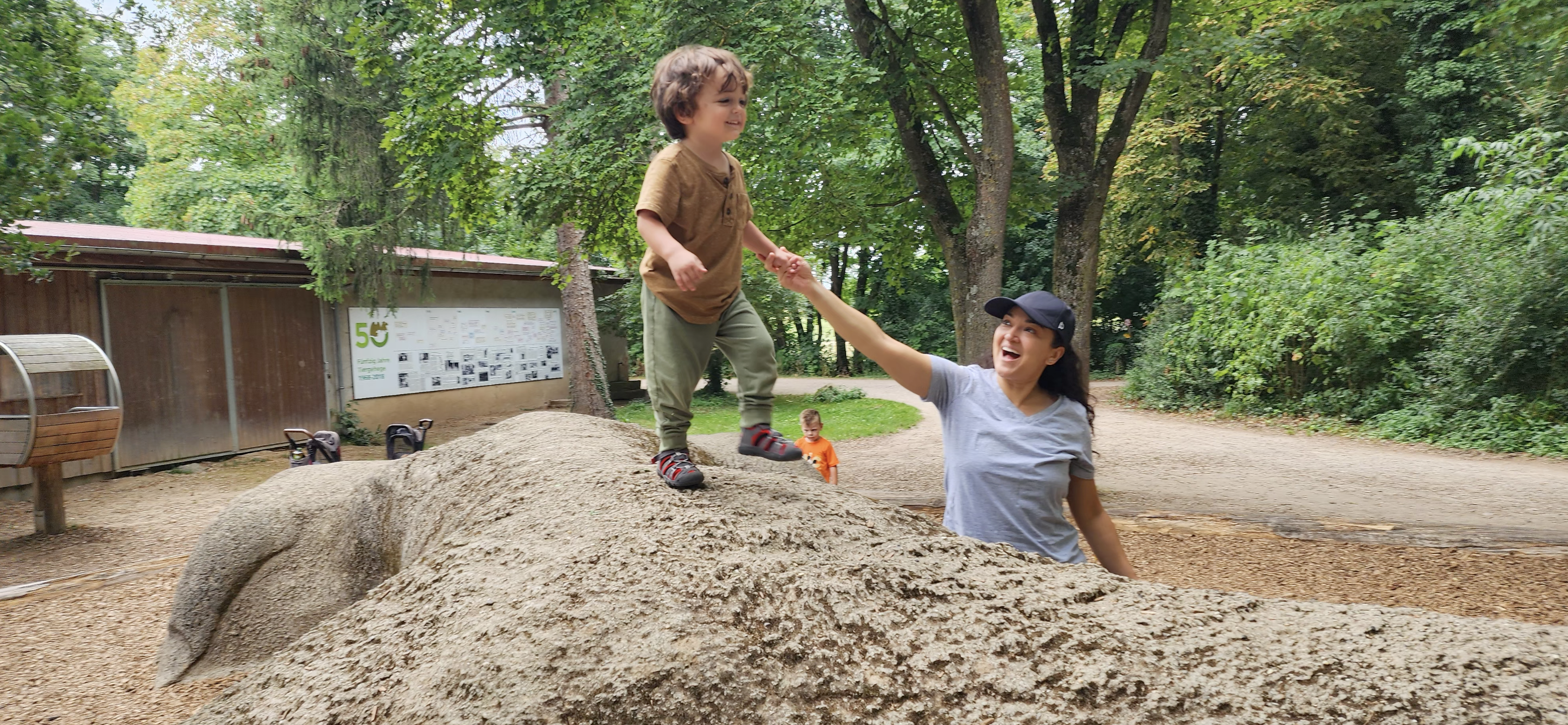
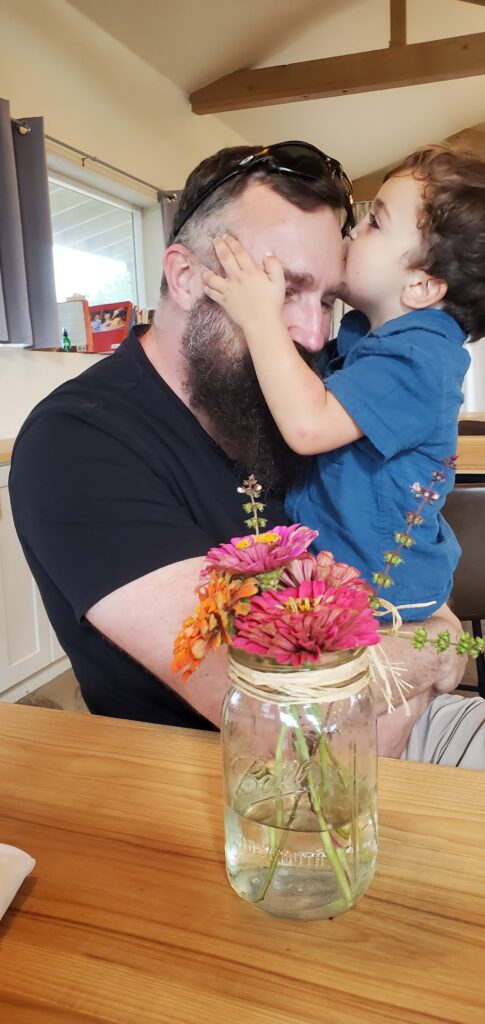 My husband, Matthias, and I have a son who is 3. By trade, Matthias is a molecular bio-physicist and an assistant professor of biology. Before starting our family, I worked in private finance and bio-pharmaceuticals. For fun, I was a rock-climbing coach and yoga teacher for children aged 3 through 12. I always loved sharing activities that either helped keep me inspired, or helped me relax when life was hectic. I also learned first-hand that sports were a love language for children who needed extra help with self-regulation. It was so incredible to share a long-standing passion with kids for their first time.
Matthias and I didn’t learn of our son’s KMT2C diagnosis until he was 14 months old. It didn’t limit our viewpoint, love, or possibilities for our son. What it did do was raise a lot of unanswered questions. Once I got actively involved in the Texas Council for Developmental Disabilities (TCDD), patient advocacy felt like a natural progression. My first hands-on introduction was providing a parent testimonial for the creation of a Texas Rare Disease Council. I was one of two parents who showed up to represent rare disease families in the state of Texas and describe the adversities of our journey.
2. Could you share your family’s experience with your child’s KMT2C diagnosis and how you navigated those early days?
It was a very bittersweet morning when we received the diagnosis from our hospital. The geneticist’s nervousness was present in every word she spoke. I’ll never forget the sense of fear and loneliness that followed the silence on the phone when I asked “Now what? What can we do to support our son? What do we do next medically?”
As a result, it forced us to ask – “how do WE as parents help our son thrive? What do we need to build to make opportunities happen?” It was quite overwhelming.
3. Your leadership with the KMT2C Foundation has made and continues to make a significant impact. What inspired you to step into that role?
Shortly after my son’s diagnosis, I volunteered with Geoff Rhyne’s organization, IDefine, for some months. Geoff inspired my Foundation journey by showing me the milestones his patient advocacy group (PAG) had accomplished. I got to see first-hand how a PAG can drive treatment options.

4. Is there a moment or achievement from your time with the KMT2C Foundation that stands out as especially meaningful? What makes it significant?
One moment that stands out was when I realized that with proper strategy, it wouldn’t take extra effort or resources to build out KMT2E’s patient advocacy group in tandem with KMT2C. It felt like a moment of clarity.
If phenotypes overlapped significantly, we could encourage a forthcoming generation of researchers to pursue our KMT chromosomes and drive a grant program. Thinking “how can we repeat our wins and lessons learned for another community?” showed me how my son inspires what I do, say, and build. He has been my greatest teacher.
I wish I could go back to his diagnostic day and tell myself “You won’t ‘sit tight’. But you & Matthias will be front row center in helping your son thrive. Trust God.”
5. From planning patient advocacy and research conferences, what key lessons or best practices would you share with others?
Keep all practices sustainable; make sure that they can be repeated and even improved upon each time they are done while maintaining compliance. Also, being in regular contact with the state agencies that focus on rare diseases and developmental delays has been incredibly fruitful. The learning curve of disability law, disability advocacy, and navigating government resources can feel like learning an entirely new language. TCDD helped the learning process ten-fold.
6. Could you provide insights into the challenges you’ve encountered while advocating for individuals with KMT2C-related neurodevelopmental disorder? How have you managed to overcome these challenges, and what lessons have you learned along the way?

The KMT2C Foundation has an incredible Advisory Council member, Emmaline Sheppard, who has been instrumental at building a safe haven for parents to connect over social media channels. I love to meet families in person, over Zoom, or even by phone. Social media is not my forte.
Having Emmaline as a partner for outreach has been amazing. She has a magnetic, radiant personality and a level of compassion that comes through – especially on social media.
As the Foundation grew and roles were identified, I had to be very clear on my own personal strengths and weaknesses, and then find parent advocates who could help me fill the areas of opportunity.
7. Which resources, networks, or tools have been most helpful to you as a parent, advocate, and/or researcher? What would you recommend to others starting out?
Texas Council for Developmental Disabilities (TCDD)
They helped us stay on top of federal and state legislation that affected our Foundation, collaborated with us on family outreach events, and even provided the opportunity for funding.
Citizen Health
The launch of Citizen Health’s AI Advocate helped us turn a cornerstone in care, research potential, and identifying patterns in symptoms that had started years prior. I’ll never forget the first emergency room trip after the launch of AI Advocate. My son was quite scared and crying. It didn’t help that it was late in the evening. In order to comfort and give him full attention, I gave the nurse permission to use my AI Advocate for all background questions. First time he rolled over? First time walking? First words said? My son’s entire medical history was digitally stored and accessible through my phone, at no cost to my family. For the first time, I got to be “just” Mom. I wasn’t educator, I wasn’t Foundation lead. AI Advocate summed up the known research on KMT2C and background questions for the nurse while I got to let my son know “You’re not alone. Mama and papa are here every step with you.”; I didn’t have to wear the Foundation hat and give an elevator speech about KMT2C, go through all of the symptoms – I could be with my son and help him in the moment.
Texas Children’s Hospital, specifically Main Campus (Houston Medical Center) and The Woodlands
We visited over seven different hospitals within Texas and only one made us feel heard as parents. Texas Children’s Hospital really saw the child behind the diagnosis and our son has absolutely loved every single specialist he’s ever met from his pediatrician to emergency room physicians, to neuro-genetics and orthopedics.
8. How has Simons Searchlight been a resource for you and your community?
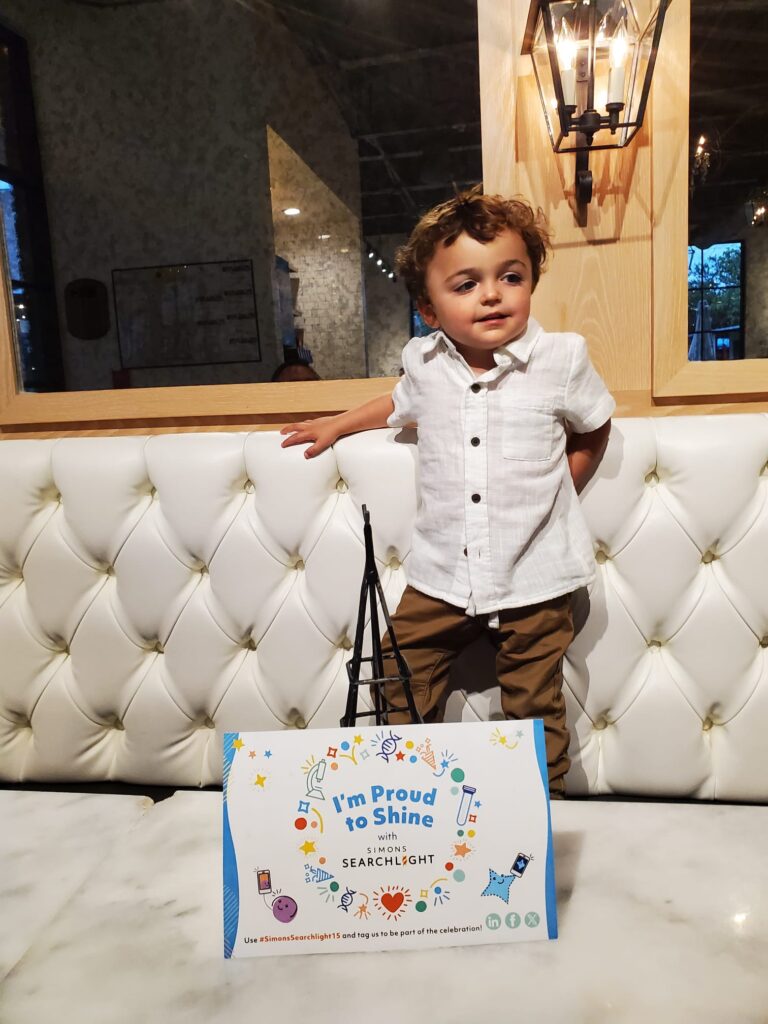
Simons Searchlight was our very first resource and to this day, I fully credit our first year of growth and outreach to their amazing team.
They had established the medical history surveys, Natural History Study, and bio-repository almost fifteen years before our Foundation came into existence.
They are paving the way!
9. What is your mantra or source of motivation that keeps you going as both a parent and a patient advocacy leader?
“Don’t be so focused on giving your child the best life that you miss giving them a great day.” The road for research, results, and funding is an aggressive and long-term, staggering hike. I always remind myself that now is the time I will know my son as a child, and the only time I will get to see the child-like magic in otherwise daily things in the way that he does.
I have a cut-off time and regular “working hours” that I do Foundation business to make sure that I can always prioritize family time and especially 1:1 time with my son.
Another source of motivation I hold dear to my heart is a poem that my grandfather dedicated to my father. Growing up, my dad read it to me often, especially during times of growth, reflection, and especially frustration. The poem is called “If,” by Rudyard Kipling.
“If you can dream—and not make dreams your master;
If you can think—and not make thoughts your aim;
If you can meet with Triumph and Disaster
And treat those two impostors just the same;
…. Yours is the Earth and everything that’s in it…”
The point is to stay anchored with the grounding aspects of life, and don’t go adrift with the emotional parts of life. For Matthias and I, that means family first focus. Wins and losses in life are temporary. Parenthood will outlive us, so we need to make every moment count.

10. Is there anything else you’d like to share with the Simons Searchlight community or with families who may just be starting their own journey?
Take notes with you when you meet with doctors and specialists. At this point in time, it’s likely that medical resources will be geared towards treating and documenting symptoms.
Don’t lose hope – quality of life is absolutely possible to achieve and participation in ongoing research helps us get closer to the reality of treatment options.
The KMT2C Foundation has multiple year-round research opportunities and we welcome any family ready to participate!
Learn more about the KMT2C Foundation.
Stay connected with Simons Searchlight
Join our newsletter to receive updates