
Rare Disease Awareness Month: The Long-Term Power of Research Participation
I just want to encourage people to take time out of their day to communicate with researchers and let us know how we can help them make the research more applicable and accessible.
Thomas Frazier, PhD, professor of psychology at John Carroll University
Rare Disease Awareness Month is a time to highlight the power of scientific research, community, lived experience, and sustained collaboration. As we kick off our 4th annual Shine Your Searchlight, we’re shining a light on why long-term research participation is essential to advancing our understanding of rare genetic neurodevelopmental conditions.
Shine Your Searchlight is a collaborative outreach campaign designed to support individuals, families, and caregivers affected by rare genetic neurodevelopmental conditions, while strengthening long-term participation across the Simons Searchlight community. This year’s campaign is made possible through partnerships with 27 patient advocacy groups (PAGs) working alongside Simons Searchlight to share clear, accessible, and trusted resources with families.

What Long-Term Engagement Looks Like
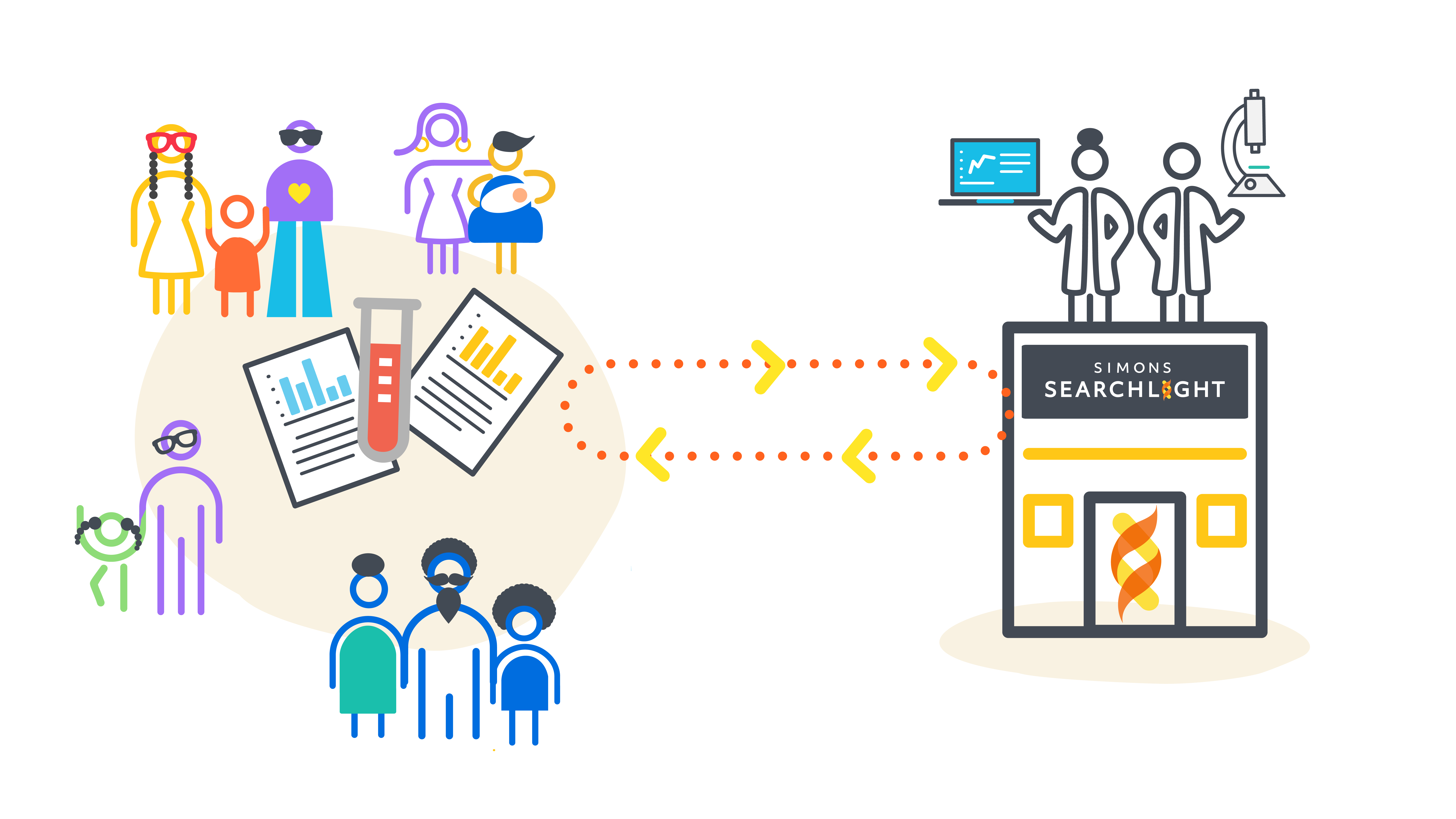
Long-term participation goes beyond staying in the study. It includes:
- Uploading genetic testing reports to ensure diagnoses are accurate and up to date
- Completing annual and follow-up research surveys
- Updating guardianship and caregiver information as roles change over time
- Completing outstanding tasks that help researchers use data effectively
Together, these steps allow researchers to understand how rare genetic neurodevelopmental conditions evolve through childhood, adolescence, and adulthood.
Why Staying Engaged Over Time Matters to Researchers
For researchers studying rare conditions, long-term participation is critical. Thomas Frazier, PhD, professor of psychology at John Carroll University and a Simons Searchlight researcher, encourages families to stay connected with research over time:
 “I just want to encourage people to take time out of their day to communicate with researchers and let us know how we can help them make the research more applicable and accessible. But please — participate, participate, participate!”
Frazier’s work uses webcam-based tools and artificial intelligence to better understand how people with rare genetic conditions think and interact. This research is made possible by families who complete surveys, upload records, and continue participating through Research Match. The Research Match program is a Simons Foundation Autism Research Initiative (SFARI) service that enables approved researchers to re-contact participants to invite them to join new research. Frazier’s work is supported in part by SFARI.
👉 Watch Dr. Frazier share more about how long-term participation strengthens research.
Why Partnerships and Long-Term Data Matter
For ultra-rare conditions, every data point counts. Jennifer Sills, founder and president of the CSNK2A1 Foundation, has seen how sustained participation strengthens our understanding of conditions like Okur-Chung neurodevelopmental syndrome.
“The more people enrolled gives us a broader picture of the disease.”
 By completing surveys, uploading genetic lab reports, and staying engaged year after year, families contribute de-identified data that approved researchers can use to better understand disease progression and support future studies.
Sills highlights that partnerships with programs like Simons Searchlight and external researchers also provide connection and reassurance for families navigating rare diagnoses.
“By joining an international research program like Simons Searchlight, families learn they’re not in the same exact boat but are in the same storm.”
The Collective Impact of Long-Term Engagement
Because families continue to complete key participation steps over time, 2025 alone made it possible to:
- Complete 15,000+ research surveys
- Review 1,250 genetic testing reports
- Generate 279 quarterly reports across 73 genetic communities
- Enable 21 peer-reviewed publications using Simons Searchlight data
- Support 198 researcher requests for data and biospecimens
These outcomes reflect sustained engagement — not one-time participation.
Looking Ahead
During Rare Disease Awareness Month — and throughout the year — the Simons Searchlight team and our PAG partners will be reaching out to support families through every step of research participation. From completing surveys and updating guardianship information to uploading genetic lab reports, each action helps ensure that research reflects real lives over time.
Long-term participation is one of the most powerful ways families can shape the future of rare disease research. Thank you for the time, trust, and commitment you bring to this work year after year.
Stay connected with Simons Searchlight
Join our newsletter to receive updates